Case Study – Scleroderma
/2 Comments/in Conditions /by Dr. Todd StoneScleroderma, Softness, and the Body’s Messages
A Story About Healing, Sensitivity, and Learning to Listen
Scleroderma is medically described as an autoimmune condition that affects collagen — the tissue that gives the body softness, flexibility, and stretch.
For some people, it affects only the skin.
For others, it can affect circulation, digestion, lungs, or even the heart.
Medicine often describes it as progressive, incurable, and something to “manage.”
But this story became something very different for me.
It became a story about listening.
About softness.
About the body asking for care instead of war.
When My Skin Started Changing
The first sign was small.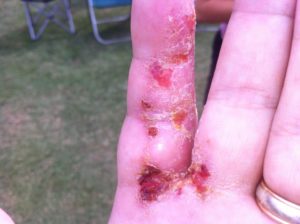
A strange little scab appeared on my finger.
There had been no injury. No scrape. No explanation.
But it didn’t heal.
Instead, it slowly spread, hardened, cracked, and became painful.
Over time, the skin thickened and tightened.
It burned.
It throbbed.
Sometimes it itched so intensely I wanted to tear my skin apart just to find relief.
My clinic manager jokingly called it my “zombie hand.”
Honestly… that wasn’t far off.
A Different Way of Looking at Illness
Most people see disease as an enemy.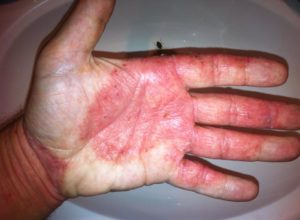
I’ve never fully experienced it that way.
To me, symptoms often feel more like messages.
Not punishment.
Not failure.
Not weakness.
Messages.
And the message I kept hearing through this experience was:
“Love your softness.”
That may sound strange to some people.
But many of us spend our lives trying to become harder:
- less emotional,
- less sensitive,
- less vulnerable,
- more productive,
- more accepted.
Sometimes the body keeps score.
The Search for Healing
When I researched Scleroderma, the message from conventional medicine was discouraging: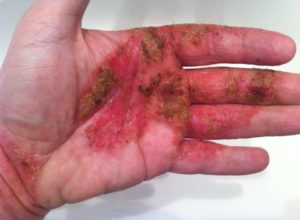
“There is no cure.”
“Nothing improves disease progression.”
Treatment focused mainly on symptom management.
But I’ve spent my life studying healing traditions, Functional Medicine, herbs, nutrition, and Eastern approaches to regulation and recovery.
So instead of asking:
“How do I suppress this?”
I asked:
“What strengthens healing?”
Supporting the Body Naturally
I began experimenting carefully with herbs traditionally used for: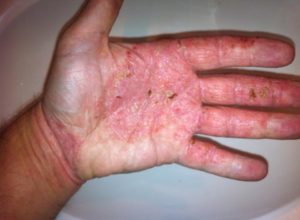
- skin repair,
- immune balance,
- circulation,
- tissue healing,
- fungal balance,
- and inflammatory support.
Some of the herbs that became important in my process included:
Gotu Kola
Traditionally used for connective tissue and skin repair. Research has explored its potential role in improving skin hardening and circulation.
Pau D’Arco
Traditionally used to support microbial balance and immune function.
Calendula
Long valued for soothing irritated tissue and supporting skin healing.
Agrimony
Historically used for inflammatory stress and digestive sensitivity.
Maca
A nourishing root traditionally used to support resilience, vitality, and recovery.
None of these were presented as miracle cures.
The goal was support.
Strength.
Healing momentum.
Discovering Triggers
One of the most important observations came unexpectedly.
I noticed my worst flare-ups often happened several days after eating gluten-heavy foods like pizza.
That fascinated me.
Because the reaction wasn’t immediate.
It was delayed.
Once I began removing gluten consistently, I finally saw a clearer healing trend.
Not perfection.
Not overnight transformation.
But progress.
And that mattered.
Healing Was Not Linear
I wish I could say I did everything perfectly.
I didn’t.
I still tested my limits.
I still ate foods I suspected would trigger symptoms.
Sometimes I paid for it.
But over time, the flare-ups became smaller, shorter, and less intense.
Healing became less about “being perfect”…
…and more about learning what strengthened me.
The Emotional Side of Healing
One of the biggest lessons from this experience had nothing to do with skin.
It had to do with sensitivity.
I realized my body reacted not only to food…
…but also to emotional pressure, conflict, conditional love, and pushing beyond healthy boundaries.
My symptoms became reminders:
- slow down,
- soften,
- breathe,
- stop forcing,
- stop armoring,
- stop abandoning myself.
That doesn’t mean emotions “cause disease.”
It means the nervous system, immune system, inflammation, stress physiology, and healing capacity are deeply connected.
And many people intuitively already know that.
What I Believe Now
I no longer see sensitivity as weakness.
I think many sensitive people were simply taught to survive by becoming hard.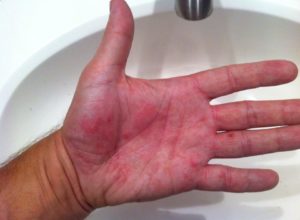
But softness is not fragility.
Softness heals.
Softness connects.
Softness listens.
And sometimes the body asks us to return to it.
A Hopeful Perspective
If you are struggling with chronic inflammatory symptoms, autoimmune issues, skin problems, fatigue, or unexplained flare-ups:
Please know this:
Your body is not your enemy.
Symptoms are not proof of failure.
And “incurable” does not mean “hopeless.”
There may still be ways to:
- support healing,
- reduce inflammatory burden,
- strengthen resilience,
- improve quality of life,
- and help the body regulate more effectively.
That journey may include:
- nutrition,
- nervous system regulation,
- herbs,
- sleep,
- movement,
- emotional healing,
- detoxification support,
- and learning what your body responds to.
Healing is rarely one single thing.
It is usually many small things, done consistently, with patience.
Final Thoughts
This experience changed me.
Not just physically.
Personally.
It taught me that healing is not always about becoming stronger in the way the world defines strength.
Sometimes healing is learning how to stop fighting yourself.
Sometimes healing is allowing softness to exist safely again.
And sometimes the body has been trying to teach that lesson all along.


Thanks to the excellent guide
Thanks, it’s quite informative