
When Your World Won’t Hold Still
Mal de Débarquement (MdDS)
A Gentle Reset for Rocking, Swaying, and Internal Motion
First — Reassurance (Please Read This)
If you feel like you are rocking, swaying, bobbing, or moving internally even when you are still, you are not broken, damaged, or degenerating.
Mal de Débarquement is not anxiety, not inner‑ear damage, and not a permanent condition.
It is a learned motion pattern that the brain has not yet turned off.
Your nervous system adapted brilliantly to motion (boat, plane, travel, repetitive movement). It simply stayed in that mode longer than necessary. Our work is not to fight your brain — it is to remind it that the movement is over.
This is reversible.
What MdDS Really Is (In Simple Terms)
Your balance system uses three inputs:
- Inner ear (motion)
- Eyes (visual reference)
- Body & feet (gravity and position)
In MdDS, these inputs are slightly out of sync. The brain keeps predicting motion even when the body is still.
The goal of this program is to gently re‑synchronize those systems — without forcing, without triggering symptoms, and without fear.
Who This Page Is For
- Rocking like you’re on a boat
- Gentle swaying side‑to‑side
- Bobbing up and down
- Internal motion without visible movement
If movement makes you feel better and stillness makes it worse, this approach is especially appropriate.
Daily Reset Routine (10–12 Minutes)
Do once or twice per day. Stop before symptoms increase.
1. Base of Skull Release (2 minutes)
Location: Soft hollows under the base of the skull on both sides
How:
- Gently press upward with your thumbs
- Let your head rest into your hands
- Slow nasal breathing
Why:
This calms the brainstem and vestibular nuclei — the core balance centers.
2. Top of Head Centering (1 minute)
Location: Very top of the head
How:
- Light touch only
- Eyes closed
- Imagine your body stacking upright
Why:
Helps your brain re‑establish a stable center of gravity.
3. Ear–Brain Reset (1 minute)
Location: Soft area behind the earlobes
How:
- Gentle circles
- One side at a time
Why:
Soothes communication between the ears and the brain.
4. Foot Grounding (2 minutes)
Location: Center of the soles of the feet
How:
- Firm but comfortable pressure
- Long slow exhales
Why:
Draws excess motion sensation downward and anchors you to gravity. Coordinates Right/Left Brain.
5. Eye Stillness Exercise (2 minutes)
How:
- Sit upright
- Hold your thumb at eye level
- Move your eyes slowly left and right
- Keep your head completely still
Why:
Reconnects eye movement to a stable world.
Stop before symptoms increase.
6. Gentle Standing Anchor (2–3 minutes)
How:
- Stand with feet hip‑width apart
- Slight bend in knees
- Very small forward/back sway only
Why:
Teaches your nervous system that stillness is safe again.
FOLLOW ALONG 👉
Pattern Differences (Quick Reference)
Rocking (boat‑like):
- Most common
- Focus on foot grounding and downward settling
Swaying (side‑to‑side):
- Add gentle cross‑body tapping
- Emphasize midline awareness
Bobbing (up/down):
- Add slow heel raises
- Emphasize lower abdominal grounding
Internal Motion:
- Use more eye‑closed practices
- Prioritize reassurance and calm breathing
Important Recovery Principles
✔ Gentle is better than intense
✔ Consistency matters more than duration
✔ Stop before symptoms increase
❌ Do not push through symptoms
❌ Do not force balance challenges
❌ Do not interpret symptoms as damage
Your nervous system recovers when it feels safe enough to stop adapting.
A Final Word
MdDS can feel isolating and frightening — but it is a functional pattern, not a permanent condition.
With calm, consistent input, the brain does recalibrate.
Stillness is not gone.
It is simply waiting to be remembered.
If you need guidance or individualized support, we are here to help.
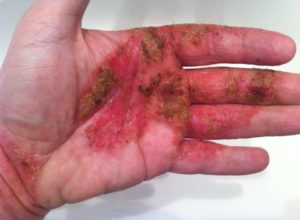 It started as a hard scab on my finger, then moved into my hand and down my arm. The scabs were hard, itchy and painful! Western Doctors call this conditions Scleroderma. Sclera- is hardening, and derma- is skin. They will explain that this condition can reach your heart and lungs, and literally harden your heart, cutting off your oxygen supply, taking your life!
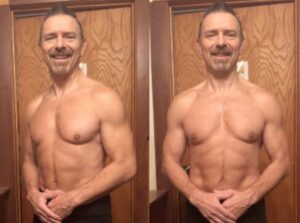 If you’re interested in how Eastern Medicine would care for your health problems or conditions…