
Five Medicines to consider if you are diagnosed with Parkinson’s!
He Was Told Parkinson’s Only Goes One Direction
A healing story about tremors, exhaustion, brain fog, inflammation, and meeting the body’s deeper needs
When he filled out his intake forms, one question asked:
“What do you think you will have to do to overcome your symptoms or condition?”
His answer was simple.
“I need a miracle.”
That was the weight he was carrying.
He had been diagnosed with Parkinson’s disease.
And the story he had been given was heavy:
This disease progresses.
The goal is to slow it down.
Medication may help for a while.
Eventually, the medication may not work as well.
And then life gets smaller.
That is a terrifying story to receive.
And when someone hears that, it can feel like the future has already been written.
But I do not like treating people as if their future is already finished.
I had never worked with a Parkinson’s patient before.
I did not know what would happen.
I did not promise a cure.
I did not make guarantees.
I simply did what I always try to do:
Look for imbalance.
Look for weakness.
Look for stress patterns.
Look for what the body still needed.
And then offer the best support I had.
His Story Started With Pain
Four years earlier, he had developed back and neck pain.
He was a veteran, so he went to the VA.
He was prescribed Tramadol, an opioid pain medication.
His wife, however, had done her own homework.
She was naturally minded and concerned about relying on a medication with a long list of possible side effects.
So she began helping him with Anamu tea, a traditional plant from South America used for inflammation and pain.
The tea helped.
It did not make everything perfect, but it made the pain more bearable.
As long as he drank it, he could still work, play, and enjoy life.
Then one day, something changed.
He could not write an order at work.
His handwriting looked like scribbles.
When he tried to walk, he lost his balance.
He stumbled.
He bumped into things.
The body was no longer just saying, “I hurt.”
It was saying, “I cannot coordinate.”
The First Diagnosis
Back to the VA he went.
This time, he was told it was spinal stenosis — a narrowing of the spinal canal that can place pressure on the spinal cord or nerves.
He was given a cortisone shot.
Then he waited for relief.
And waited.
And waited.
But relief never came.
Then one hand began shaking.
Not a little tremor.
A constant, uncontrollable shaking.
He could barely function.
So he went back again.
After a coordination test, he was diagnosed with Parkinson’s disease.
The Parkinson’s Story
Parkinson’s disease is usually understood as a neurological condition affecting movement, coordination, tremor, posture, gait, and often energy, mood, sleep, and thinking.
In his case, the diagnosis came with a grim emotional weight.
He accepted the medical plan and began L-Dopa.
He returned two more times to report that it was not helping enough.
Each time, the dose was increased.
On a triple dose, he finally felt some relief.
He could walk with less tripping and stumbling.
He could write again.
But the tremor remained.
His back and neck still hurt.
His brain was foggy.
His body was exhausted.
And even with medication, he still shuffled with the characteristic Parkinson’s gait.
His body was crooked, slumped, and pulled downward.
He told me he could not lift his head to look straight ahead.
His Body Was Working So Hard to Survive
That actually made sense to me from the perspective of regulation.
I often call the central nervous system Regulation because its job is to organize survival.
If Regulation cannot fully trust the legs, balance, and movement, survival forces the eyes downward.
Watch your steps.
Protect yourself.
Don’t fall.
Don’t look ahead yet.
Look down.
That is not laziness.
That is the nervous system adapting to instability.
The problem is that compensation costs energy.
And he had almost none left.
On our intake form, we ask patients to rate how tired they feel from zero to ten.
He marked an X just inside 10.
That means he felt nearly out of energy.
Almost empty.
Sleep should have helped, but he also marked extreme difficulty sleeping.
So he was exhausted and unable to restore.
That is a brutal combination.
The Medical Records Told a Confusing Story
When I reviewed his medical records, it looked like his previous doctors knew something did not fit neatly.
They had tested for hepatitis C.
Cancer.
Blood glucose problems.
Drugs.
It looked like they were trying to find the box his symptoms belonged in.
Then the tremor appeared.
He failed the coordination test.
And suddenly the box was clear:
Parkinson’s disease.
But a diagnosis is not always the same thing as a complete explanation.
The diagnosis named the movement pattern.
It did not answer the deeper question:
Why was his whole system breaking down?
That was the question we had to ask.
I Had No Parkinson’s Protocol
I want to be honest about this.
I did not have a Parkinson’s protocol.
I did not have a “Parkinson’s medicine.”
I had never cared for someone with this diagnosis before.
So I approached him the same way I approach any complex case.
I examined for imbalance.
I looked for weakness.
I looked for what strengthened him.
I looked for what stressed him.
I searched for the body’s needs.
Because the name of the disease is not always the most important starting point.
Sometimes the better starting point is:
What does this person’s body need in order to regain strength, balance, and regulation?
Meeting Needs, Not Chasing Labels
Using muscle testing as a form of biofeedback, we found several patterns.
His arm weakened to bacterial stress.
His strength improved with thymus and adrenal glandular support.
That made sense to me.
The thymus is deeply connected to immune education.
The adrenals are deeply connected to stress resilience, energy, inflammation, and survival chemistry.
His body looked exhausted.
His immune system looked burdened.
His stress system looked depleted.
So we supported those needs.
Then his arm weakened to oxidation.
Oxidation is one way the body shows wear and tear — like internal rust from stress, inflammation, toxins, and cellular strain.
He strengthened to Camu Camu, a berry from South America known for its antioxidant properties.
Then his arm weakened to an autoimmune pattern and strengthened to vitamin D.
That also mattered.
Vitamin D is not just a bone nutrient.
It plays a major role in immune regulation.
Then he weakened to a radiation-type stress pattern and strengthened to a plant commonly known as Gale of the Wind, or Phyllanthus niruri.
Again, the goal was not to treat the label.
The goal was to meet the needs his body revealed.
Immune stress.
Oxidative stress.
Autoimmune stress.
Adrenal exhaustion.
Inflammation.
Neurological regulation.
This was the map.
Nature’s Support
His first plan included two glandular extracts, vitamin D, Camu Camu, and Phyllanthus.
All from nature.
All chosen because his body showed weakness in specific patterns and strength with specific support.
Was it conventional?
No.
Was it a guarantee?
No.
Was it a sincere attempt to meet his body’s needs?
Yes.
And that is the heart of this work.
When someone has been told there is no way to heal, I hear something different.
I hear:
“With the tools I have, I do not know how to help you.”
That is not the same as:
“There is no help available anywhere.”
So we began.
No promises.
No expectations.
Just our best effort.
Four Weeks Later
Four weeks later, he came back with a clear change.
He said his mind was clearer than it had been in well over a year.
That alone was significant.
Because brain fog is not just annoying.
Brain fog steals confidence.
It makes people feel like they are disappearing from the inside.
Then he said he noticed a trend.
His tremor was somewhat better — maybe 5 to 10%.
That may sound small.
But in a condition he had been told would only progress, a 5 to 10% improvement mattered.
It meant the body could still respond.
It meant the trend was not only downward.
It meant there was a door.
A small door, maybe.
But a door.
The Healing Trend
This is one of the most important lessons in the story:
Do your best and monitor the trend.
Not obsessively.
Not fearfully.
But carefully.
Is sleep a little better?
Is energy a little stronger?
Is coordination a little smoother?
Is the tremor a little calmer?
Is the mind a little clearer?
Is recovery a little faster?
Are bad days less severe?
That is how the body often shows us the path.
Healing is rarely a straight line.
But a healing trend matters.
And his trend continued.
By the end of the second month, his tremor had decreased dramatically — approximately 60 to 70% by his report and observation.
The same tremor that had not improved with a triple dose of medication was finally changing when we supported the deeper system.
That was remarkable.
The Process Took Time
This was not a one-visit miracle.
It took over a year of careful work.
As he improved, he worked with his prescribing doctor to gradually reduce his medication.
Each time the dose was lowered, some symptoms would return.
Not like the original shaking I saw on his first visit, but enough to show that his body still needed more support.
So we kept meeting needs.
At one point, we added Frankincense to support inflammation.
Inflammation matters in neurological conditions.
It matters in pain.
It matters in swelling.
It matters in brain function.
It matters in recovery.
As inflammation decreased, his symptoms calmed again.
Over time, he became harder and harder to recognize as the man who had first walked into my office.
His posture improved.
His tremor improved.
His clarity improved.
His function improved.
Eventually, you could barely tell he had been diagnosed with Parkinson’s.
Still a Process
He still had work to do.
He still had medication to manage.
He still had limits to respect.
He still had to listen carefully.
But the story was no longer hopeless.
That matters.
Because once someone believes the future is only decline, they stop looking for strength.
They stop looking for needs.
They stop looking for possibilities.
But when the body responds, even a little, hope becomes practical.
Not fantasy.
Practical hope.
The kind that says:
“My body can still change.”
A Regular Guy Again
Instead of living inside a depressing prognosis, he became more like a regular guy again.
A man exploring his limits.
A man who pushes himself for the people he loves.
Sometimes too far.
Maybe you can relate.
But now, when he breaks down, he has a process.
He has support.
He has a way to listen.
He has a way to respond.
He has a way to ask:
What does my body need now?
That is very different from living under a sentence of decline.
The Lesson
The lesson from this story is not that every Parkinson’s patient needs the same supplements.
It is not that everyone should stop medication.
It is not that Parkinson’s should be managed without a neurologist.
It is not that anyone should expect the same result.
The lesson is this:
A diagnosis may describe the pattern, but it does not always reveal every need underneath it.
Under the Parkinson’s label, we found other patterns.
Immune stress.
Bacterial stress.
Oxidation.
Autoimmune stress.
Adrenal exhaustion.
Inflammation.
Radiation-type stress.
Brain-body regulation issues.
Those were needs we could support.
And when we supported them, his body responded.
That is the real lesson.
Meeting Needs
This is the phrase I come back to again and again:
Meet the need.
Symptoms are messages.
Tremor is a message.
Fatigue is a message.
Brain fog is a message.
Pain is a message.
Poor sleep is a message.
Posture is a message.
Inflammation is a message.
The body is not random.
It is communicating.
And sometimes, even in a diagnosis that sounds hopeless, there are still needs we can meet.
More strength.
More immune balance.
More antioxidant support.
More adrenal resilience.
More inflammation control.
More neurological regulation.
More repair.
More support for the person, not just the disease label.
This Is Why I Created Body Restoration 90
This is exactly why I created Body Restoration 90 (BR90).
BR90 is for people who have been given a diagnosis, but still feel like the deeper pattern has not been fully understood.
Pain.
Fatigue.
Brain fog.
Tremors.
Poor sleep.
Inflammation.
Autoimmune patterns.
Gut problems.
Blood sugar instability.
Hormone changes.
Nervous system stress.
A body that feels weaker, less coordinated, less resilient, or harder to live in than it used to.
In BR90, we do not just chase symptoms.
And we do not reduce you to a label.
We look for the deeper pattern.
Stress physiology.
Immune activation.
Oxidative stress.
Inflammation.
Adrenal depletion.
Gut and liver burden.
Blood sugar regulation.
Nutrient weakness.
Nervous system regulation.
Recovery blocks.
The hidden reasons your body may be stuck in survival mode.
Then we coach you step by step to help your body repair, rebuild, and respond differently.
If You Have Been Given a Diagnosis That Feels Hopeless
Maybe your story is not Parkinson’s disease.
Maybe it is another neurological condition.
Chronic pain.
Autoimmunity.
Fibromyalgia.
Fatigue.
Brain fog.
Tremors.
Poor coordination.
Insomnia.
Inflammation.
A diagnosis that came with a story of decline.
I am not saying to ignore that diagnosis.
I am not saying to stop your medication.
I am not saying your path will look like his.
I am saying this:
Your diagnosis may not be the whole story.
There may still be needs underneath it.
And when the right needs are met, the body may have more capacity than you were told to expect.
That is what BR90 is designed to explore.
If this story sounds familiar, I invite you to apply for Body Restoration 90 (BR90).
Tell us what you have been diagnosed with.
Tell us what your body has been doing.
Tell us what has helped and what has not.
Tell us where you feel stuck.
You may not need another hopeless story.
You may need someone to help you look underneath the label, find the needs, and support your body back toward strength, clarity, and possibility.


 Now I was sweating. I didn’t understand what I was seeing, and I didn’t know what to do about it! Was I in over my head? I nervously proceeded with my best effort.
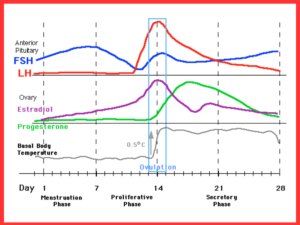 I don’t think PMS is “normal.” It’s a symptom of imbalance and body needs. What did she need to find comfort?
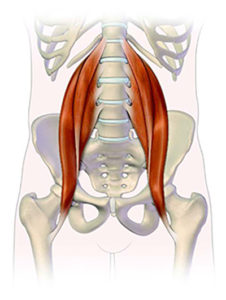 bulges without severe trauma. I remembered a professor describing this possibility, but I hadn’t seen it in a patient before. The infected organs cause spasm of a muscle called the Psoas. It crosses your hip and it’s attached to the spine above. When it spasms, it pulls on the spine, causing multiple discs to bulge.
 “I share my story to share hope. You never know where the right answer will be, but with determination and a willingness to try anything, I found relief.”